Antimicrobial Resistance
Twenty-seven-part public investigation written and published by Blake Vanderhyde in 2026.
The investigation examines the global antimicrobial resistance crisis, the scientific and regulatory challenges of medical device innovation, and the possible role of non-pharmaceutical technologies in addressing antibiotic-resistant bacterial infection and is offered freely to qualified researchers, clinicians, regulators, operators, and public health leaders who wish to evaluate, challenge, refine, or build upon it.
Between 2020 and 2025, Blake Vanderhyde stepped outside his legal practice to work as a consultant and public health advocate focused on antimicrobial resistance. The work began during the early months of the COVID-19 pandemic, after a chance encounter at a park in Wayzata, Minnesota, and developed into a five-year effort involving former U.S. Senator Rudy Boschwitz, medical device entrepreneur Michael Afremov, physicist and inventor Dr. Eliaz Babaev, and Arobella Medical, LLC.
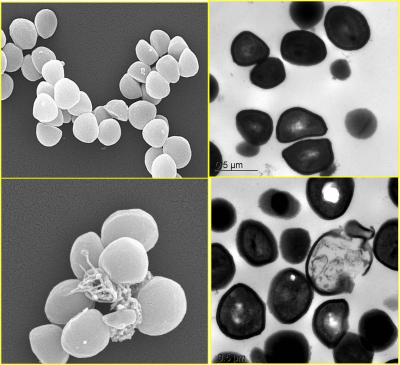
At the center of the investigation was the Qoustic Wound Therapy System, a low-frequency ultrasound device studied for its effects on antibiotic-resistant bacteria. Early in vitro studies suggested that low-frequency ultrasound may damage bacterial cell walls and reduce bacterial counts. Clinical confirmation would be required before any therapeutic conclusions could be drawn.
The full investigation was published on Medium in 2026.
Read the full investigation: Antimicrobial Resistance: A 5 Year Investigation by Blake Vanderhyde
The Origin
A chance meeting in a park, and a five-year effort
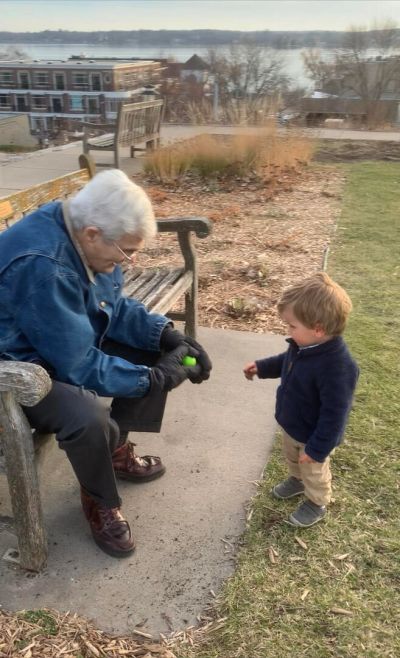
The work began in the early months of the COVID-19 pandemic. While taking regular walks with his young son in a park in Wayzata, Minnesota, Blake frequently crossed paths with former U.S. Senator Rudy Boschwitz. What started as casual conversations between neighbors soon evolved into a productive collaboration that would span the next five years.
During that time, Blake introduced Senator Boschwitz to Michael Afremov, the entrepreneur and co-founder of AGA Medical Corporation. AGA Medical pioneered minimally invasive devices for the treatment of congenital heart defects and was acquired by St. Jude Medical in 2010 in a transaction valued at $1.1 billion. Through Afremov, Blake was introduced to Dr. Eliaz Babaev, a Soviet-trained physicist who holds more than 100 international patents and is widely regarded as a leading authority in non-imaging therapeutic ultrasound.
At the center of the work was the Qoustic Wound Therapy System, a low-frequency ultrasound device studied for its effects on antibiotic-resistant bacteria. Early in vitro studies suggested the technology could possibly damage bacterial cell walls and reduce bacterial counts, though clinical confirmation would be required before any therapeutic conclusions could be drawn. The technology and its underlying patent platform are operated through Arobella Medical, LLC.
The Work
Five years across science, regulation, and policy
Over a five-year period, working alongside Senator Boschwitz, who opened every door, Blake took part in meetings and communications with a wide range of leaders, including sitting U.S. Senators and members of the House of Representatives, senior White House staff, federal regulators at the Food and Drug Administration and the National Institutes of Health, board members of healthcare and technology companies, lobbyists representing public health interests, and Fortune 500 executives across healthcare and finance.
He examined the antimicrobial resistance crisis from multiple angles: the underlying physics of acoustic disruption of bacterial cell walls, the regulatory pathways available to a novel device, the clinical trial design questions, the financial structures required for translation to clinical use, the competitive landscape, and the ethical considerations of advancing investigational technology in a public health emergency.
He brought no scientific or medical training to the work. He learned what he needed by asking questions, reading deeply, working alongside artificial intelligence systems, and translating between domains.
A Moment from the MedTech Journey
NAMSA facility opening, 2023
In September 2023, Blake Vanderhyde and former U.S. Senator Rudy Boschwitz attended the opening of an expanded preclinical research facility operated by North American Science Associates (NAMSA) in Coon Rapids, Minnesota. NAMSA is a global contract research organization specializing in medical device testing, clinical research, and regulatory consulting.
Medical Alley, a healthcare innovation network representing more than 800 partner organizations, published a short video from the event. The footage shows Vanderhyde and Senator Boschwitz attending the ribbon-cutting ceremony and speaking with members of Minnesota’s medical technology community.
Watch the original Medical Alley video below.

Blake Vanderhyde and U.S. Senator Rudy Boschwitz at the 2023 opening of NAMSA’s research facility.
The Investigation
The arc of the series, and its self-critique
Blake recounts the investigation in a 27-part series published on Medium.
The opening installments introduce the key individuals involved and the technology at the center of the story.
The middle chapters follow the work itself: an early regulatory setback, a prolonged search for strategic partners across the medical device industry, and the gradual realization that the most promising path forward differed significantly from the one originally envisioned.
The later sections examine the underlying science, the clinical evidence required to validate the technology, and the regulatory pathway that any novel medical device would need to navigate.
Near the conclusion, the investigation turns inward. In a sustained section titled What Could Go Wrong: An Honest Assessment, the central thesis is rigorously tested against its own scientific, regulatory, commercial, and ethical vulnerabilities. The analysis is deliberately written against the author's own interests, with the goal of exposing weaknesses rather than defending conclusions.
The series concludes by offering the framework openly to others. The investigation carries no commercial agenda or framing. Blake currently holds no equity interest, board position, or financial stake in the technology discussed, and he received no compensation for the public work. The framework is presented freely, with an open invitation for qualified individuals and organizations to evaluate, challenge, refine, or build upon it.